On 10th October 1881, Charles Darwin’s magnificent final book, The Formation of Vegetable Mould Through the Action of Worms, with Observations on their Habits, was published. Unexpectedly successful in its day, it’s now something of a forgotten nature-writing classic.
Here’s Darwin describing an earthworm taking a crap:
A worm after swallowing earth, whether for making its burrow or for food, soon comes to the surface to empty its body. The ejected earth is thoroughly mingled with the intestinal secretions, and is thus rendered viscid. After being dried it sets hard. I have watched worms during the act of ejection, and when the earth was in a very liquid state it was ejected in little spurts, and when not so liquid by a slow peristaltic movement. It is not cast indifferently on any side, but with some care, first on one and then on another side; the tail being used almost like a trowel. As soon as a little heap is formed, the worm apparently avoids, for the sake of safety, protruding its tail; and the earthy matter is forced up through the previously deposited soft mass. The mouth of the same burrow is used for this purpose for a considerable time.
This is pure Darwin: exquisite observation of the apparently trivial. But Darwin knew it was important to sweat the small stuff. As he is quick to point out in the introduction to his final book:
the maxim “de minimis lex non curat,” [“the law does not care about trifles”] does not apply to science.
Although, at face value, his earthworms book might seem charmingly eccentric, bordering on worm-obsessed at times, Darwin had an agenda. Responding to a Mr Fish, who, writing in the Gardeners’ Chronicle, had dismissed Darwin’s earlier hypothesising about the contribution made by earthworms to the formation of the topmost layer of soil–the ‘vegetable mould’–Darwin writes:
Here we have an instance of that inability to sum up the effects of a continually recurrent cause, which has often retarded the progress of science, as formerly in the case of geology, and more recently in that of the principle of evolution.
Small change writ large was a recurring theme in Darwin’s work, be it in geology, evolution, or the bioturbatory action of earthworms.
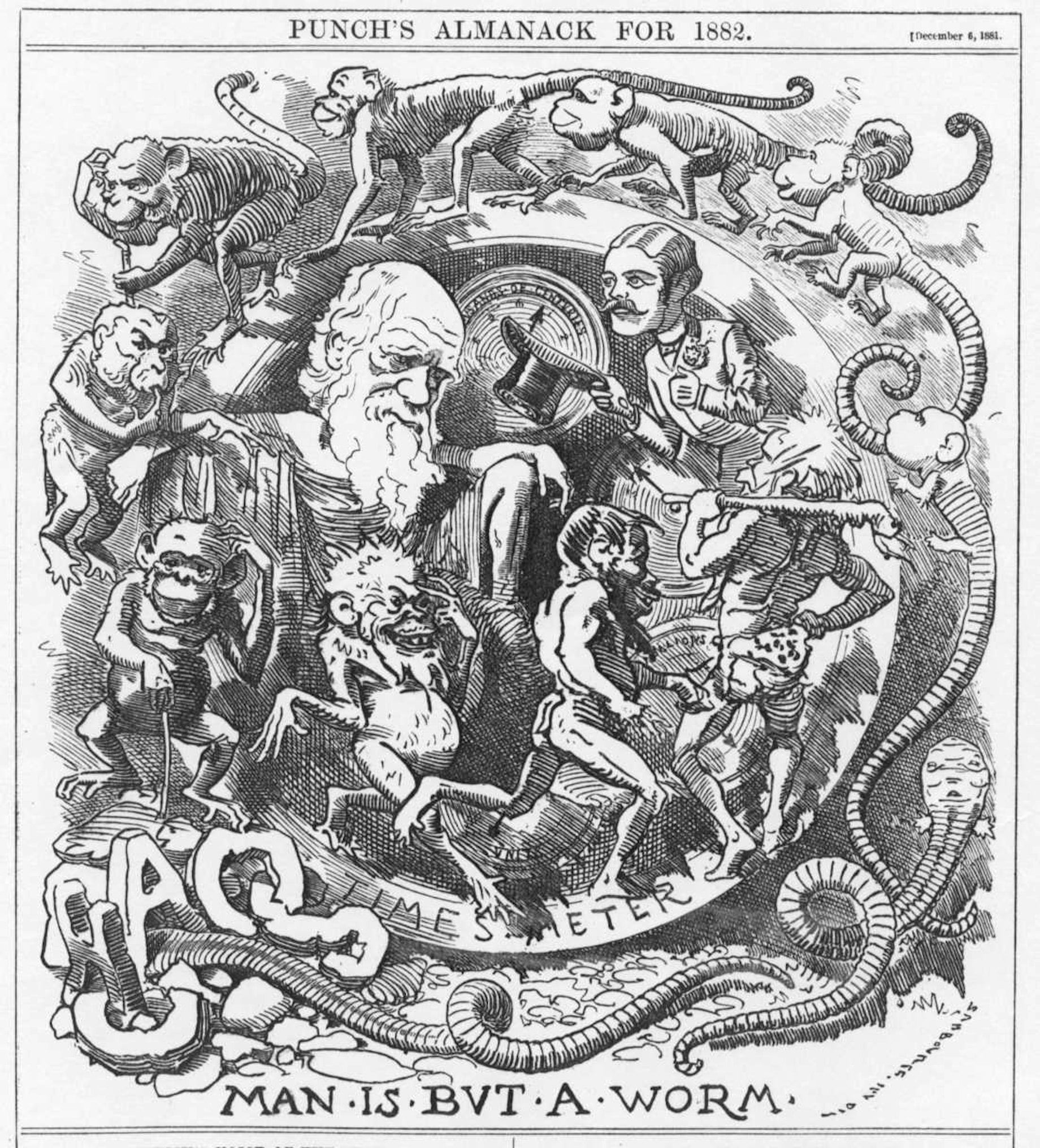
For a longer version of this article, see my review of Darwin’s magnificent swan-song.

Leave a Reply