Darwin and Wallace: the lost photograph

I’d heard the legend, of course. Every Darwin groupie has. The missing photograph of the two co-discoverers of evolution by means of Natural Selection, Darwin and Wallace, standing side-by-side. Together. In the same frame.

The incorrigible sceptic in me had always dismissed the tale as a myth. Wishful thinking. It never happened. But wouldn’t it be fantastic if it had?

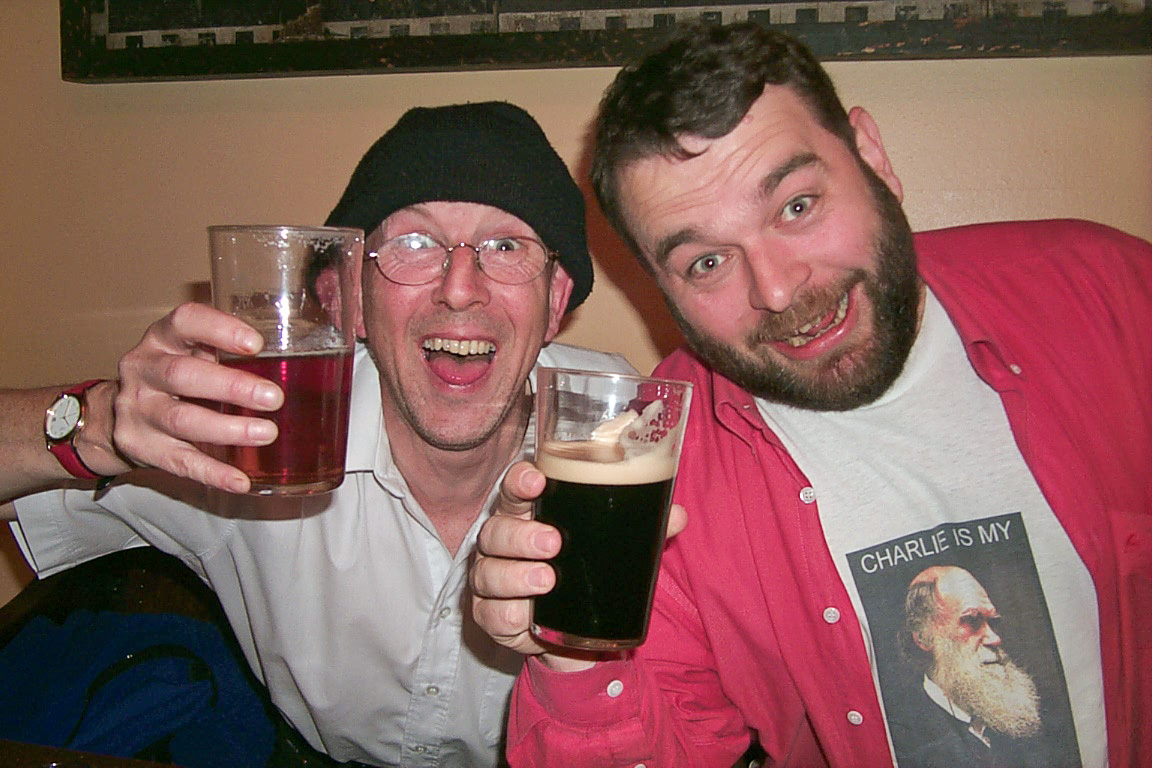
And then, last week, browsing the History of Science section in one of my favourite second-hand bookshops, I chanced upon a collection of Thomas Henry Huxley’s essays, Darwiniana. I picked it up to examine it, and this fell out:

Darwin and Wallace

The legendary missing photograph: Darwin (R) and Wallace (L).

There’s a Pulitzer in this for me, mark my words.

19th April, 1882: the death of a hero

After decades of mysterious ailments, and a short, final illness, Charles Darwin died at 4 o’clock in the afternoon on Wednesday 19th April, 1882, at Down House, Downe, in Kent. His devoted wife, Emma, and some of their grown-up children were with him at the end. He was 73 years old.

The following week, after Darwin’s funeral at Westminster Abbey, his great friend and bulldog, Thomas Henry Huxley, wrote in the science journal Nature:

It is not for us to allude to the sacred sorrows of the bereaved home at Down; but it is no secret that, outside that domestic group, there are many to whom Mr. Darwin’s death is a wholly irreparable loss. And this not merely because of his wonderfully genial, simple, and generous nature; his cheerful and animated conversation, and the infinite variety and accuracy of his information; but because the more one knew of him, the more he seemed the incorporated ideal of a man of science. Acute as were his reasoning powers, vast as was his knowledge, marvellous as was his tenacious industry, under physical difficulties which would have converted nine men out of ten into aimless invalids; it was not these qualities, great as they were, which impressed those who were admitted to his intimacy with involuntary veneration, but a certain intense and almost passionate honesty by which all his thoughts and actions were irradiated, as by a central fire.

Three years later, in his capacity as one of the trustees of the British Museum, the Prince of Wales was presented with a statue of Darwin to be placed in the National Museum of Natural History (nowadays known simply as the Natural History Museum). Huxley, now President of the Royal Society, and chairman of its Darwin Memorial Fund Committee, gave the formal address at the handing-over ceremony, stating:

We had lost one of these rare ministers and interpreters of Nature whose names mark epochs in the advance of natural knowledge. For, whatever be the ultimate verdict of posterity upon this or that opinion which Mr. Darwin has propounded; whatever adumbrations or anticipations of his doctrines may be found in the writings of his predecessors; the broad fact remains that, since the publication and by reason of the publication, of “The Origin of Species” the fundamental conceptions and the aims of the students of living Nature have been completely changed. From that work has sprung a great renewal, a true “instauratio magna” of the zoological and botanical sciences.

It has become fashionable these days amongst historians of science to decry (or even deny) the existence of scientific heroes: science is a collaborative effort; its practitioners do not work in isolation; their work is based on that of their predecessors and peers. Anyone who has studied Darwin knows this to be the case: he simply could not have achieved what he did without literally hundreds of predecessors, peers, friends, enemies, and correspondents.

Anyone who makes—or even attempts to make—a contribution to our understanding of the natural world is a hero in my book. They all deserve statues. But the broad fact remains, some heroes are bigger than others. It took a Charles Darwin to achieve what he did. Others, no doubt, could and would have got there, but it was Darwin who did. So why try to deny him the ultimate verdict of posterity?

Huxley was right, the late Charles Darwin was the incorporated ideal of a man of science. A hero in anyone’s book.

Sculpture of Charles Darwin, Natural History Museum, London

Sculpture of Charles Darwin
Natural History Museum, London.
Photo: Richard Carter, FCD

UCL’s free public Lunch Hour Lecture series

I just received the following email, which might be of interest to those of you within easy reach of London (although the event will also be available online):

I’m hoping that one of UCL’s free public Lunch Hour Lectures on Tuesday 4 June entitled Dinosaurs in Crystal Palace Park will be of interest to you and other members of the Friends of Darwin.

I work in UCL’s events team running our free public Lunch Hour Lecture series. The lectures are going ‘on tour’ to the Museum of London this summer with a short series of four talks being held on Tuesdays in June, 1.15pm-1.55pm.

For more information about the full series visit: www.ucl.ac.uk/lhlontour

The lectures are free and open to all on a first-come first-served basis and require no pre-booking. Lectures can also be watched live online at www.ucl.ac.uk/lhl/streamed or after the event at our YouTube channel www.youtube.com/UCLLHL

Date: Tuesday 4 June, 1.15pm

Venue: The Weston Theatre, Museum of London, 150 London Wall, EC2Y 5HN

Title: Dinosaurs in Crystal Palace Park

Lecturer: Prof Joe Cain, UCL Science and Technology Studies (@profjoecain)

Summary: The famous ‘monsters’ in Crystal Palace have been on display since the park opened in 1854. These are the first life-sized three-dimensional sculptures of dinosaurs and other prehistoric beasts, but there is a lot more to them than meets the eye. Discover the ideas behind them with science historian Professor Cain.

How to put Darwin on your iOS device

Want to put a nifty Charles Darwin icon on your iPhone, iPad or other iOS device?

It’s dead easy. Simply visit any page on the Friends of Charles Darwin website in your device’s Safari browser (I would recommend the home page or blog page), then select the Send To icon (immediately to the left of the Safari address bar on an iPad, or at the bottom of the screen on an iPhone/iPod touch) and click Add to Home Screen, like this:

darwin-iOS-icon-add

…and Charlie-Bob’s your uncle:

Darwin iOS icon

Darwin iOS icon (third from left).


A shameless and pathetic plug, I realise. But it puts Darwin on your desktop for Pete’s sake!

Weather-forecasting frogs

In recent years, I’ve become a huge fan of the writings of the late W.G. Sebald. Not that I always understand what’s going on in them, you understand. Sebald blends fiction, biography, memoir, and a bunch of other genres in a prose style which is frankly breathtaking. Although he lived in Norfolk, and had a command of English better than most, Sebald wrote in his native German, working closely with the translators of the English editions of his books.

Such a Sebald-groupie have I become, that I thought it was about time I read some of his poetry. I’m not very good with poetry. I don’t get most of it. But I thought I’d give it a shot, and have just finished reading Sebald’s Across the Land and the Water: Selected Poems, 1964–2001.

What can I say? I found Sebald’s poetry utterly incomprehensible. I’m sure it’s fantastic, but, as I read it, I stared open-mouthed at each page, wondering, ‘What on Earth is he on about?”

Why am I telling you all this on a blog which is supposed to be dedicated to the history of science in general, and Charles Darwin in particular? Well, because one of Sebald’s poems, Barometer Reading, begins as follows:

Nothing can be inferred
from the forecasts

Tree frogs
are ignoring their ladders

Do you see what I mean? What on Earth is he on about?

At the end of the book, Sebald’s translator, Iain Galbraith, includes some brief notes about the poems. A note about Barometer Reading, reads:

ignoring their ladders: weather-frogs (tree-frogs) were kept in preserve glasses with some water in the bottom and a small ladder. If the weather was changing for the better the frog would climb the ladder; if rain was imminent the frog descended the ladder.

Weather-forecasting frogs. Now that’s more like it!

I’ve done a bit of Googling, but haven’t been able to find out an awful lot about these weather-forecasting frogs. From what I can tell, they seem to have been mainly a German/Swiss phenomenon. Sebald was brought up in the Bavarian Alps, near to the Swiss border, so that’s almost certainly where he heard about them.

I did, however, discover one wonderful etching on Wikimedia from page 385 of the journal Die Gartenlaube, 1887 (it’s worth clicking through to the full-sized version):

page 385 of journal Die Gartenlaube, 1887.

A few things I haven’t been able to establish:

  • who first thought up the idea for these weather-frogs?
  • were they a serious attempt to forecast the weather, or where they just a bit of harmless fun?
  • did they actually work?

Any information gratefully received in the comments, thanks.

Hmmm, thinks… I’ll bet Thony C knows something.

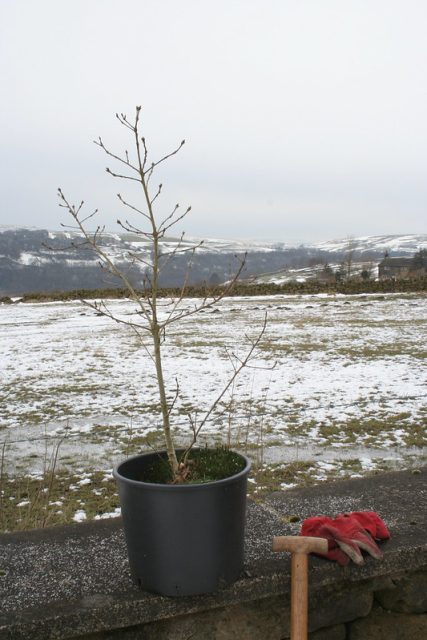
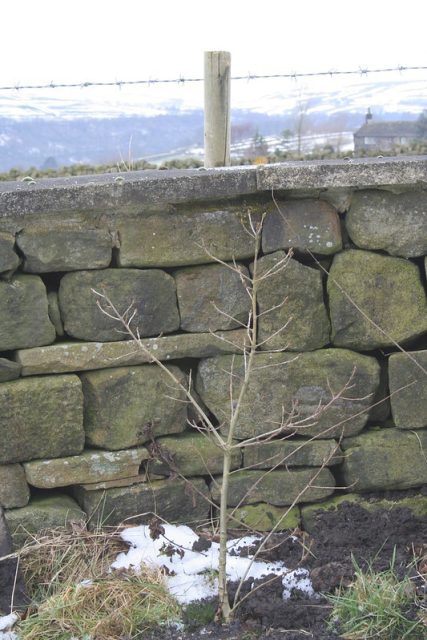
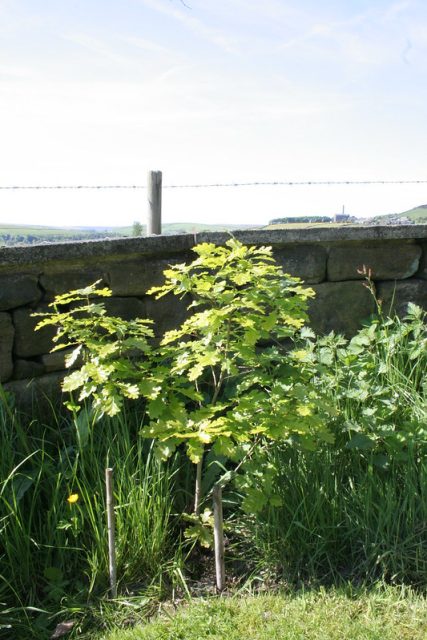
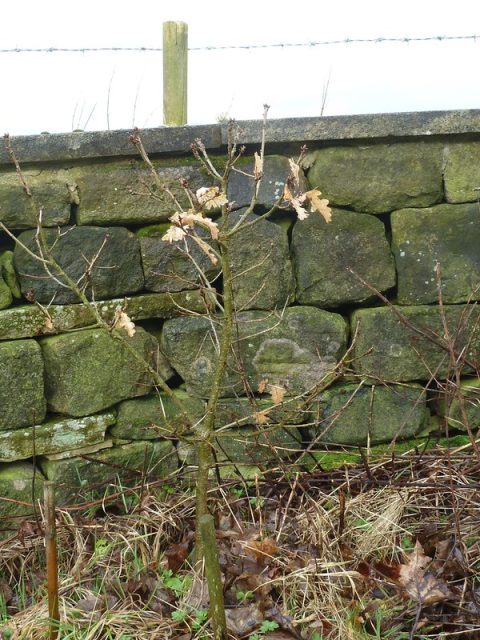
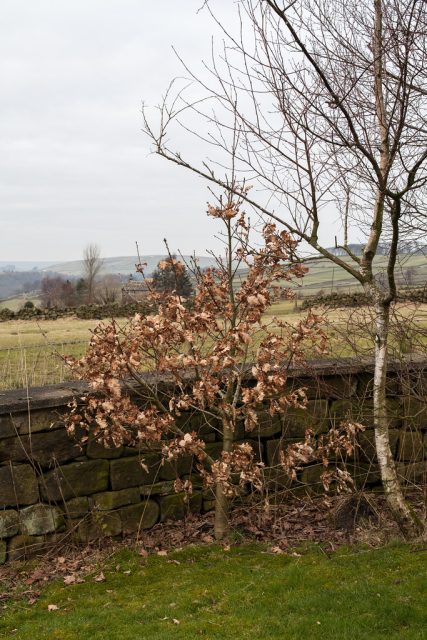
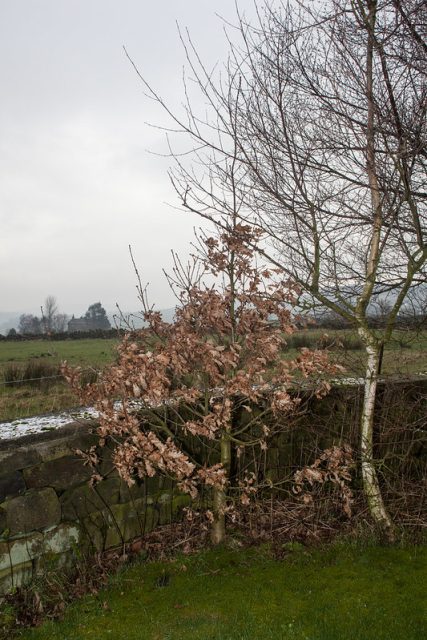
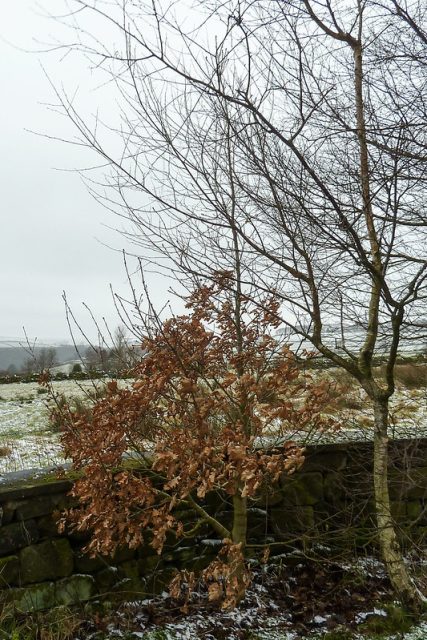
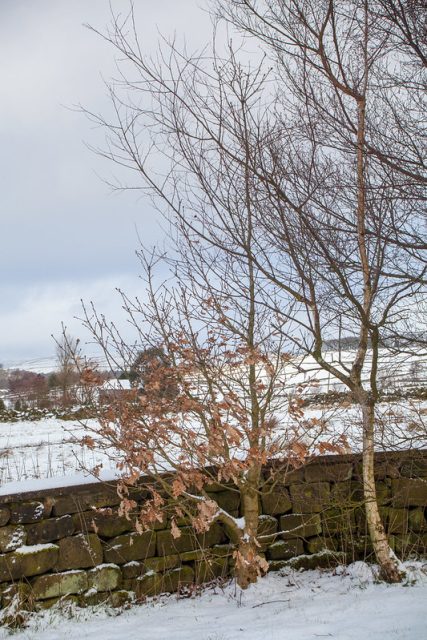
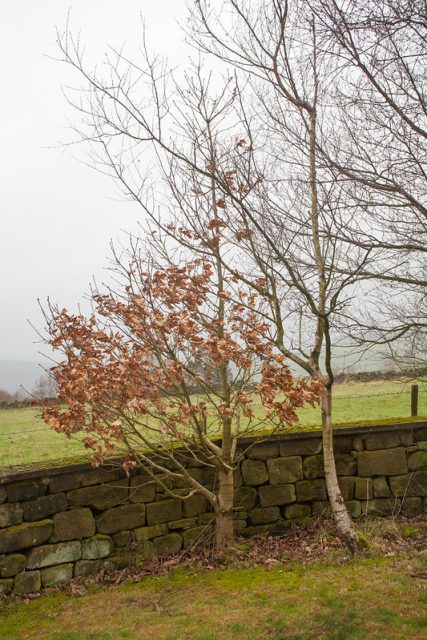
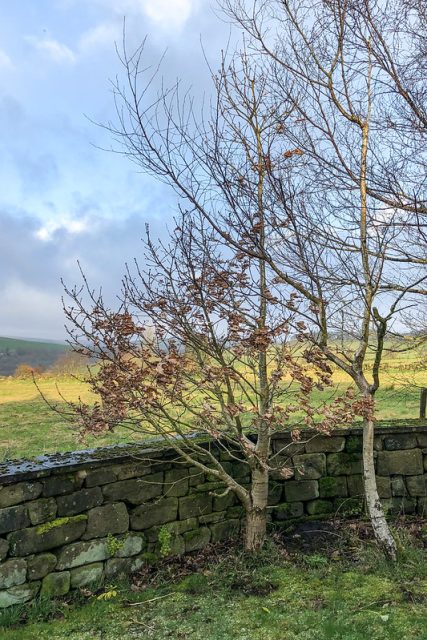
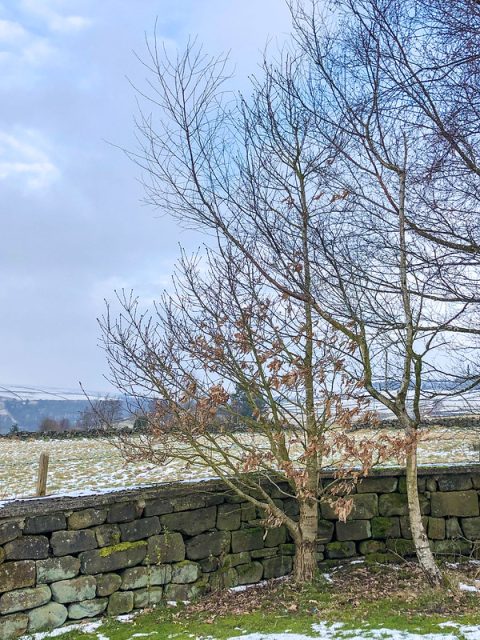
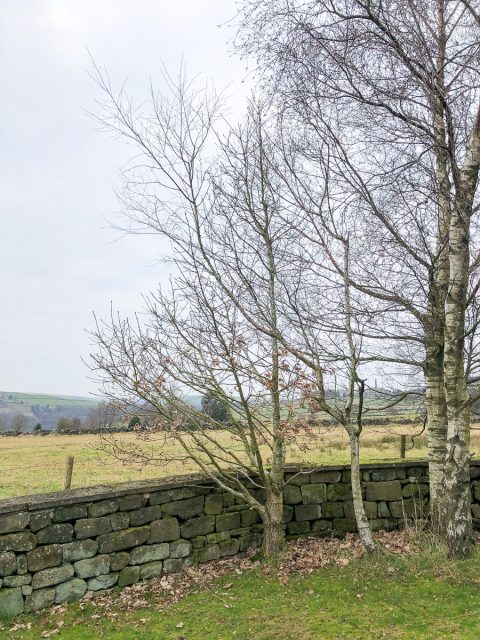
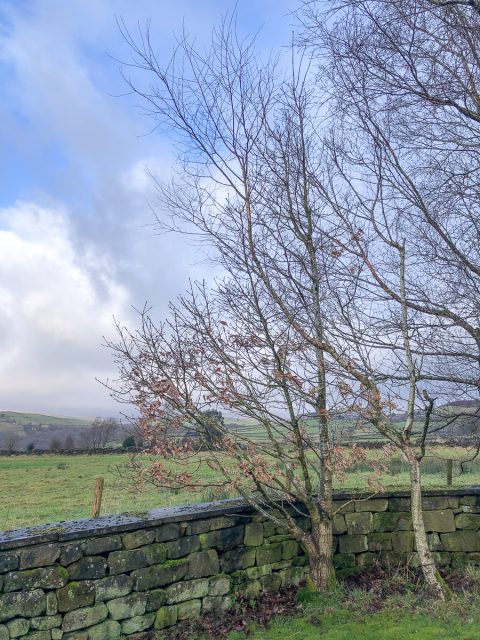
The Darwin Bicentennial Oak, four years on

The Darwin Bicentennial Oak

Planted 12-Feb-2009

12-Feb-2013

12-Feb-2013

Four years ago today, I planted the Darwin Bicentennial Oak in my garden. I am pleased to report that it is doing well, and has now grown into a magnificent, erm, small sapling.

This tree-growing malarkey is a long-term commitment.

It occurs to me that I might have spent the last four years inadvertently gathering material for the longest time-lapse movie ever. Or should that be shortest?